
You are currently viewing a placeholder content from TrustIndex. To access the actual content, click the button below. Please note that doing so will share data with third-party providers.
More Information
A library move is not a normal relocation. It’s not just about quantity, weight, and transport, but above all about classification systems, collection security, conservation protection, and depending on library type, operational continuity. Most important: the shelving order must be maintained, collections must not be mixed up, and sensitive media require gentle, traceable handling.

Gebr. Roggendorf GmbH supports library relocations as structured transfer projects, from planning and collection safeguarding to logistics and documented handover. We assist public libraries, academic libraries, archives, and collections nationwide and internationally.
A library move is a transfer of holdings with clear rules: media must be sorted, protected, traceable, and moved to the new location on schedule. In practice, a smooth relocation succeeds especially when logistics, classification, and documentation are closely coordinated.
Three central goals take center stage:
Maintain the existing classification and order,
ensure the unambiguous retrievability of all collections,
document handovers and processes in a traceable manner.
From this arise clearly defined processes for packing, transport, tracking, and subsequent shelving at the destination. A structured approach, a clear classification system, and trained staff ensure that every item retains its place and collections are handed over completely and correctly.
A professional library move begins long before the first box is packed. Here, planning is not “nice to have”, but rather the prerequisite for later finding and using the collections.
Depending on the scope, moving stages, responsibilities, and handover points are defined. Clearly specified construction or relocation windows (e.g., relocating archives section by section) and coordinated communication channels with library management, departments, and if necessary, construction/project management are typical.
The time required for a library move depends less on square meters and more on collection structure, access points, classification complexity, special holdings, and whether operations are to continue in parallel. A precise schedule prevents bottlenecks in storage areas, transport routes, and delivery zones.
Often, the question is not whether to relocate, but how to maintain ongoing operations. Especially for public libraries or university sites, a full closure is not always possible or desired.
In practice, staged relocation concepts prove their worth: collections are transferred step by step while defined areas remain usable. This includes clearly marked restricted areas, controlled routing, and clear responsibilities to ensure no media ends up “in between” or “outside” the system.

Maintaining the shelving order is one of the core objectives. A library move is only successful if, at the destination, media are placed exactly where they belong according to the classification.
To achieve this, holdings are handled in order-preserving units. It is essential that packing, transport, and unloading are organized in a way that preserves sequence and allocation, even with large quantities.
Errors usually do not arise during carrying, but at transfer points: during packing, transloading, or interim storage. Clear labeling, controlled handover points, and documented processes are key here.
Many institutions want to know how inventory and tracking can be implemented in practice, especially with large collections and multiple moving phases.
Depending on the starting point, inventory lists, barcode scans, or RFID may be used. It is essential that labeling is consistent and fits the later shelving/re-shelving process.
For sensitive or particularly valuable holdings, tighter tracking may be appropriate, up to and including documented handovers and a traceable chain of custody. The goal is transparency: Where is each unit and when was it handed over?
Not all media are the same. Books, journals, archival materials, and special collections each need suitable protective measures.
Depending on the collection, sturdy archive boxes, suitable protective materials, and dust- and shock-reducing packing solutions are used. It is important that packing not only protects, but also enables clear association with later shelving.
With rare books, manuscripts, estates, and collection materials, conservation care is critical. Here, the focus is on protection against mechanical stress, clean handling, and, depending on the collection, additional documentation (e.g., condition reports/photo documentation).
For sensitive media, climate-controlled transport with temperature and humidity monitoring may be important, especially with sensitive collections or particular conservation requirements. It is crucial to clarify transport and intermediate storage conditions in advance and integrate them into the process.
In library relocations, it’s often not only the collection that is affected, but also the infrastructure, especially for storage solutions.
Shelf dismantling, transport, and shelf assembly must be integrated into the project plan to ensure collections do not end up “without a destination”. With compact/mobile shelving systems, coordination between dismantling, transport, reassembly, and subsequent placement is essential.
If the classification or space usage changes (e.g., new storage structure), clear shelving and reorganization logic are necessary. In such cases, it’s not only about order-preserving moves, but also the controlled implementation of new shelving plans.
Libraries and academic institutions often work with sensitive data: loan records, user accounts, administrative documents, or archived personal records.
If loan records, interlibrary loan documents, or internal administrative documents are part of the relocation, clear rules must be set for how data are protected, transported, and handed over. Access and permissions should be clearly defined for the project.
In sensitive projects, non-disclosure agreements (NDAs) and clear instructions for handling confidential materials are an important part of project security.

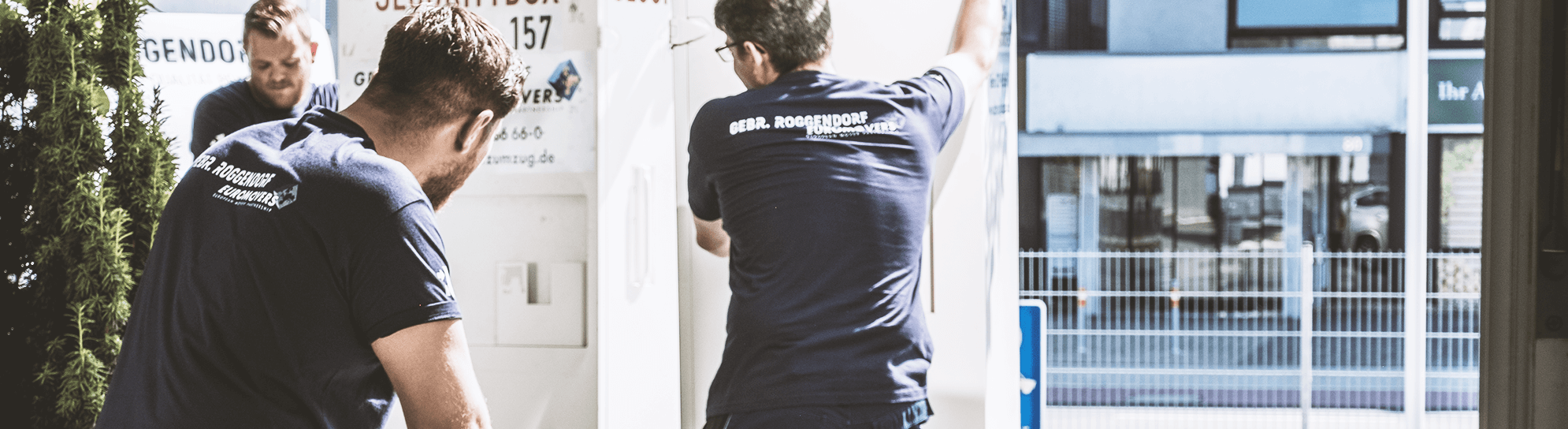
Transparent handovers are crucial—for internal traceability, acceptance, and the assurance that collection units arrive fully.
Depending on the project, handovers can be logged and, for sensitive collections, complemented by condition or photo documentation. This provides clarity in the case of complaints, questions, or later audits.
In case of damage or loss, it must be clearly settled in advance how liability and insurance are handled. Library collections have not only material but often historical or academic value.
Insurance coverage and liability issues are clarified project-specifically, tailored to the collection, transport type, protective measures, and documentation requirements. The aim is comprehensible coverage without room for interpretation.
The cost of a library move depends on the scope and requirements, particularly order preservation, special collections, access, interim storage needs, shelving systems, and the level of documentation desired.
• Quantity and structure of holdings (book stock, journals, archival material)
• Complexity of classification/order-preserving units
• Special collections and conservation requirements
• Shelving systems (dismantling/assembly, mobile/rolling shelves)
• Inventory/tracking and documentation scope
• Staged planning and operational continuity (remaining open)
We have extensive experience with complex library relocations—from academic libraries and special libraries to large university libraries.
Here are some examples from our practice:
Several tens of thousands of linear meters of library holdings
Relocation and cleaning of corresponding library shelves
Outbound and return relocations over several years
Separation of holdings with individual volume selection according to shelfmark list
Framework contract partner for many years
Several thousand linear meters of media holdings
Compaction and new shelving at the site
Move and compaction of media holdings at another location
Relocation of a national library with several tens of thousands of linear meters of books, including RARA collections (rare and valuable books)
Several hundred card catalog cabinets including contents
Move from 9 old locations to a new building
Scanning of several hundred thousand books to determine the new destination (reading room or stacks)
Re-shelving of large book collections for relocation to the reading room
International working group for major project
These projects demonstrate:
From academic special libraries to large national projects with several tens of thousands of linear meters—we understand the requirements for order-preserving, gentle, and documented library relocations.
Are you planning a library transfer, media relocation, archive move, or a change of location for your institution? Gebr. Roggendorf GmbH supports libraries and archives with structured planning, order-preserving processes, and gentle logistics—nationwide and internationally.
For a quick assessment, it is especially helpful to provide:
• Library type and collection structure (book/journal/archive/special collection)
• Classification/systematics requirements (maintain vs. reorganization)
• Shelving systems (mobile/rolling shelves, new installation)
• Requirements for inventory/tracking and documentation
• Timeframe, access, and desired operational continuity
Request your library move now to ensure order, collection, and operations remain reliably planned and maintained.
You are currently viewing a placeholder content from Vimeo. To access the actual content, click the button below. Please note that doing so will share data with third-party providers.
More InformationYou are currently viewing a placeholder content from YouTube. To access the actual content, click the button below. Please note that doing so will share data with third-party providers.
More InformationYou need to load content from reCAPTCHA to submit the form. Please note that doing so will share data with third-party providers.
More InformationYou are currently viewing a placeholder content from TrustIndex. To access the actual content, click the button below. Please note that doing so will share data with third-party providers.
More Information