
You are currently viewing a placeholder content from TrustIndex. To access the actual content, click the button below. Please note that doing so will share data with third-party providers.
More Information
A move can be a challenge for both individuals and companies. Whether it’s a business relocation, an employee move, or a private move to a new apartment, well-organized logistics are essential to ensure everything goes smoothly. Moving boxes play a central role: they help transport your belongings safely and neatly. They come in many different sizes and designs, so there is a suitable box for every moving need.
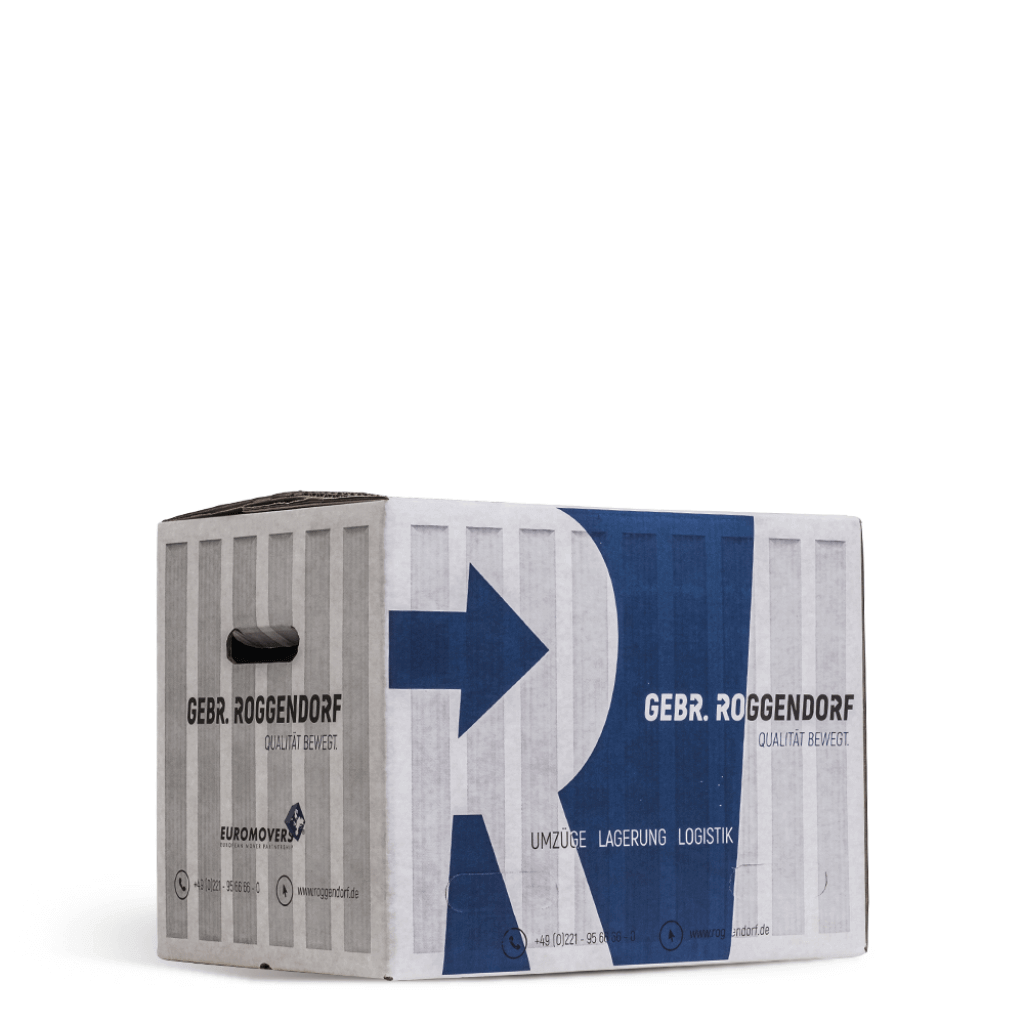
Here you will find out which moving boxes are best suited to your needs and how to pack your belongings to ensure everything arrives intact.
Our sturdy moving boxes in a modern container style are not only practical, but also eye-catching. In addition to the proven standard size, we offer you further professional packing materials depending on your project:
Ideal for hanging clothes such as suits, dresses, or delicate garments. Wardrobe boxes are provided on your moving day and collected after the move—so your clothes stay wrinkle-free and clean, and you only pay for the actual use.
For office relocations and larger company projects, mobile transport systems are used. These allow for quick, back-friendly transport without constant lifting—especially efficient for files, IT equipment, or office supplies.
“Our boxes in container style are robust, sustainable, and stand out—our customers notice this time and again. And with the right additional solutions, every move becomes more efficient.”
Moving boxes should above all be sturdy and resistant, so that even heavy items like books, kitchen utensils, or electronics can be transported safely. Double-walled boxes are particularly suitable, as they are especially robust and protect your items from impacts or moisture. When transporting fragile items such as glass or porcelain, you should also use padding materials like bubble wrap or packing peanuts to provide extra security.
“A move is more than just transporting things—it’s about safeguarding your precious memories and the security of your belongings.”
A good moving box should not only be sturdy, but also easy to handle.
The most important features include:
• A solid base that reliably supports the weight
• Well-closing closures so the box doesn’t pop open during transport
• Carrying handles or reinforced edges to make handling easier
Many manufacturers also offer boxes with reinforced corners or special handles that make transport even safer.
For hanging clothes, we use wardrobe boxes. These are brought along on the moving day and taken back afterwards, and are usually rented out because they are expensive to buy and sell, and at our company are reused multiple times. This way, your clothes remain wrinkle-free and clean.
For other garments that don’t necessarily need to be hung, large or medium moving boxes are ideal. Large boxes are suitable for bulky items of clothing like jackets or coats, while medium boxes are perfect for smaller garments such as shirts or trousers.
We rent out our sturdy moving boxes and offer a complete service: We deliver the boxes you need to your door, and after your move we collect them again. You don’t have to worry about anything—not procurement, nor disposal.
For long-distance moves, we sometimes use used sales boxes or offer boxes for sale—depending on the project and distance, we tailor the solution to your situation.
All returned boxes are professionally processed in our box press on our premises and prepared for the next use. This saves resources, avoids waste, and is hassle-free for you: no disposal worries and no space problems after your move.
“Our customers especially appreciate not having to take everything to the trash themselves after unpacking. We collect everything—done.”
Buying moving boxes is especially worthwhile if you have several moves planned, or if you want to reuse the boxes later.
Benefits of buying:
Note for long-distance moves: Usually used sales boxes are used or boxes are offered for purchase in long-distance transport—depending on need and project.
• Better quality and durability
• Possibility of reuse for future moves
• Flexibility regarding the required quantity and appropriate accessories (e.g. wardrobe boxes)
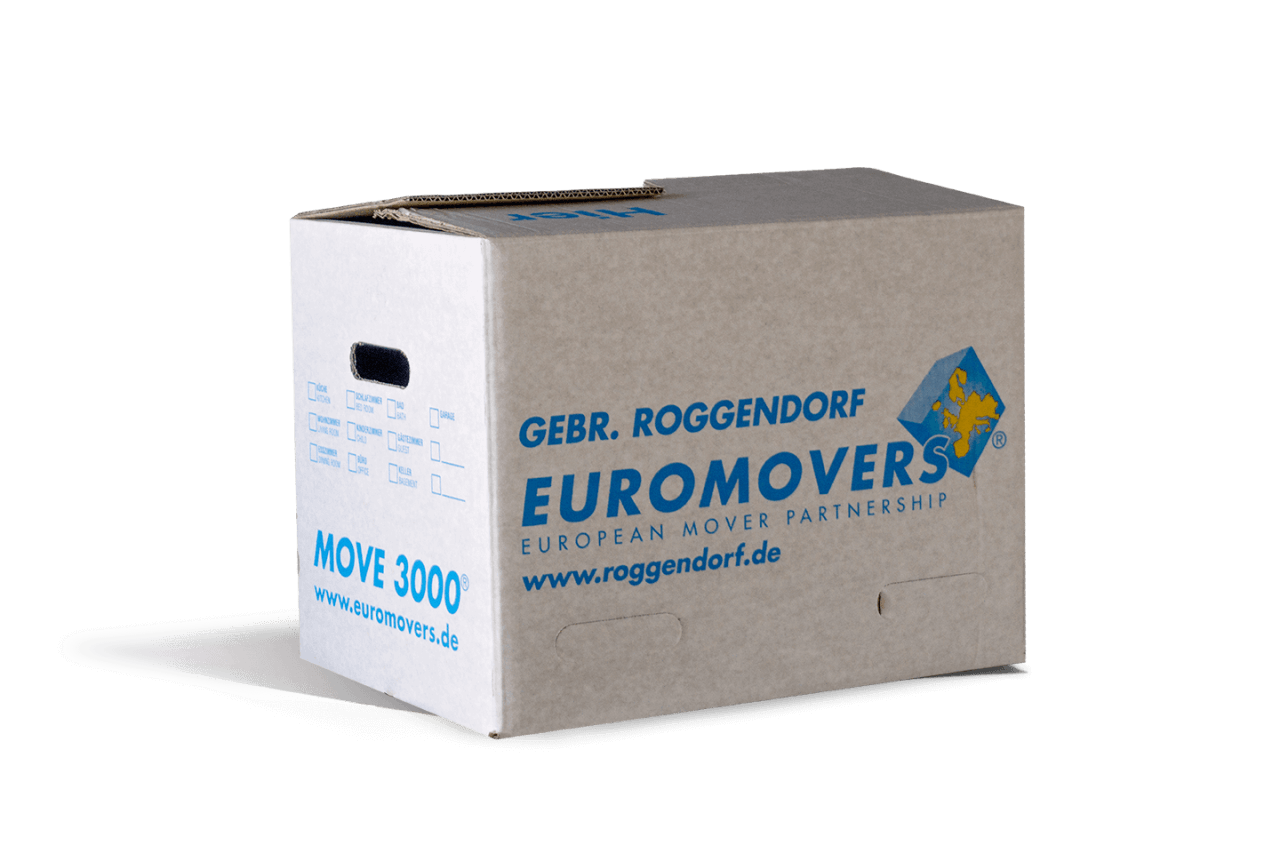
Classic moving boxes are usually purchased or passed on after the move. What is typically rented from us are wardrobe boxes—because they are high-quality, long-lasting, and can be used multiple times.
It’s important not to pack moving boxes too heavily to avoid damage. Boxes that are packed too heavy can tear or be difficult to transport.
Books and files:
These should be stored in small boxes so the weight remains manageable.
Clothes:
Hanging clothes go in wardrobe boxes, folded clothes in standard boxes.
Fragile items:
These should always be protected with padding materials such as bubble wrap or packing peanuts.
Avoid packing dangerous or perishable items in moving boxes, as these can pose a risk.
Many people label their moving boxes on the top lid. The problem: once the boxes are stacked—in the van, in storage, or at the new place—nobody can see what’s inside. If you need to find a specific box, you’ll have to move everything around.
Better: Label boxes on the side, ideally on two opposite sides. This way the contents remain visible even when stacked. Note the destination room and roughly what’s inside—for example, “Kitchen – dishes” or “Office – folders.” For fragile goods, “Fragile” should be clearly visible.
This saves time when unloading and ensures each box gets to the right place straight away, without people having to ask or move things around.
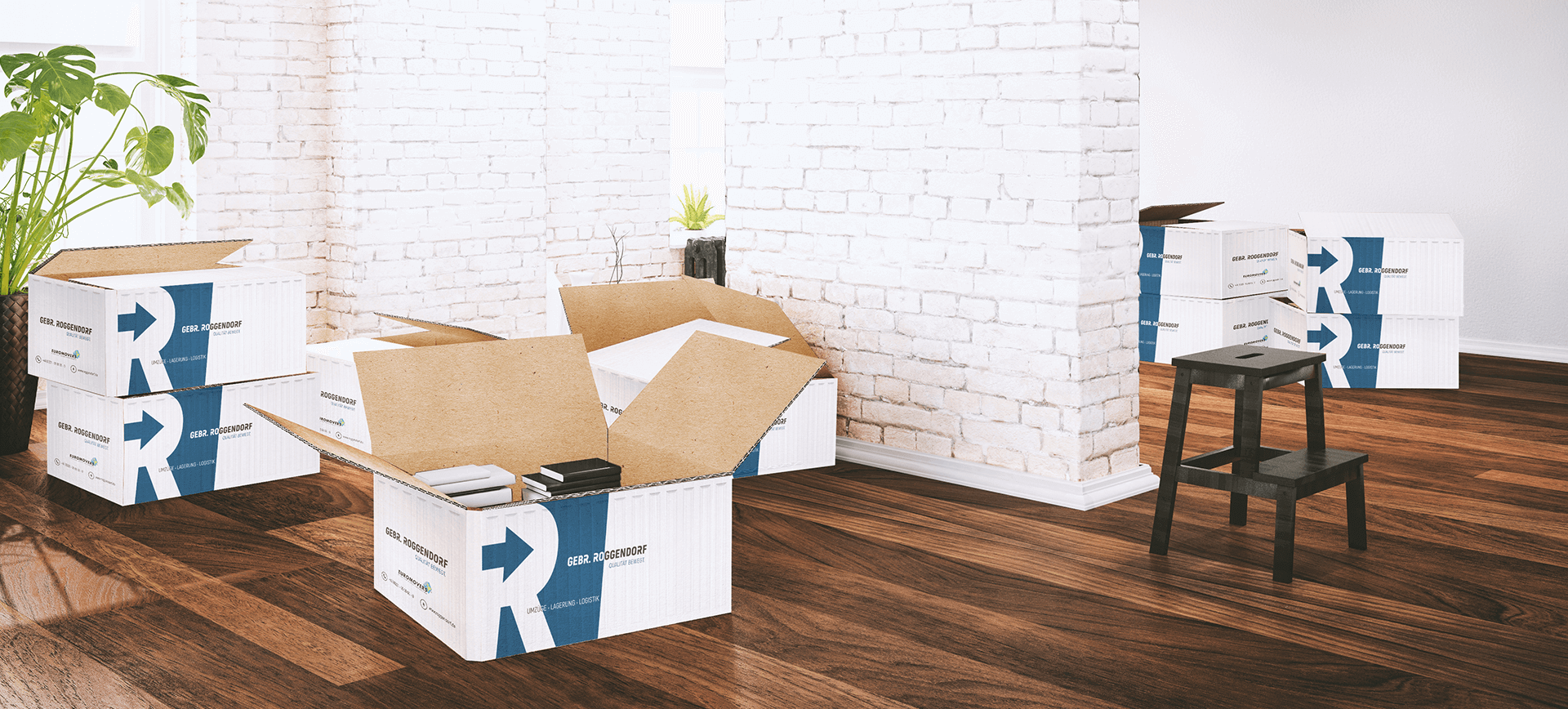
For fragile items like glass or porcelain, you should always use sufficient padding material.
There are a few simple rules that make packing safer:
• Use bubble wrap or packing paper for protection
• Place items in the center of the box and fill the box with additional padding material
• Extra padding around the corners and edges provides extra protection
Pack plates on edge—a proven moving trick
One detail many don’t know: plates are safest packed standing on edge, like records. Why? Because when stacked this way, the pressure is distributed more evenly and the risk of breakage decreases.
How it’s done: Wrap each plate individually in packing paper or bubble wrap and then stand them on edge in the box. The plates are placed next to each other, not on top of each other. Fill any gaps with additional padding so nothing shifts. Avoid stacking plates flat—this increases the pressure on the bottom ones and is more likely to cause damage.
This trick has been standard in the moving industry for decades, because it works. Many of our customers are surprised that their plates really do arrive more safely this way.
The right moving boxes are a key component for a smooth move. Stability, the right sizes, and good usability all determine whether books, clothes, or delicate items reach their destination safely.
Many customers say after their move: “I’m glad I had the right boxes and nothing was damaged.”
We advise you on the right box selection and provide sturdy boxes and wardrobe boxes upon request.
If you value sustainability, you should consider moving boxes made from recycled materials. These not only help to reduce waste, but are just as sturdy as new boxes and support a resource-saving practice.
Recycled boxes:
Reduce environmental impact
Are as sturdy as new boxes
Promote sustainable practices
International moves have different requirements than domestic transport. The journeys are longer, the loads greater, and depending on the mode of transport—sea freight, air freight, or overland—different packing solutions are needed.
Containers are used here, in which your goods are in transit for several weeks. Sturdy wooden crates, reinforced boxes, and moisture protection are standard because temperature fluctuations and humidity at sea are a factor. Fragile items are additionally wrapped in shrink wrap or special climate sleeves.
Weight is the decisive cost factor for air freight. That’s why we use lighter but still robust materials for air shipments. The packaging requires less protection from moisture, but labeling and customs-compliant packing are important so that nothing gets held up at customs clearance.
The requirements here are similar to national moves, with the difference that cross-border shipments often take longer and encounter various climatic conditions.
In most cases, moving boxes can be recycled. Many cities have special collection points where boxes can be handed in. If you want to reuse the boxes, you can save them for future moves or use them as storage boxes. Another option is to pass them on to friends or neighbors. Or you can sell or donate the boxes to keep them in circulation for longer.
Choosing the right moving boxes plays a central role in ensuring a safe and efficient move. Depending on your needs, you should pay attention to the right size, sturdiness, and sustainability of the boxes to optimally protect your belongings and make your move as smooth as possible.
If you need more information about our moving boxes or assistance with your move, contact us today. We are happy to advise you and help make your move stress-free.
You are currently viewing a placeholder content from Vimeo. To access the actual content, click the button below. Please note that doing so will share data with third-party providers.
More InformationYou are currently viewing a placeholder content from YouTube. To access the actual content, click the button below. Please note that doing so will share data with third-party providers.
More InformationYou need to load content from reCAPTCHA to submit the form. Please note that doing so will share data with third-party providers.
More InformationYou are currently viewing a placeholder content from TrustIndex. To access the actual content, click the button below. Please note that doing so will share data with third-party providers.
More Information